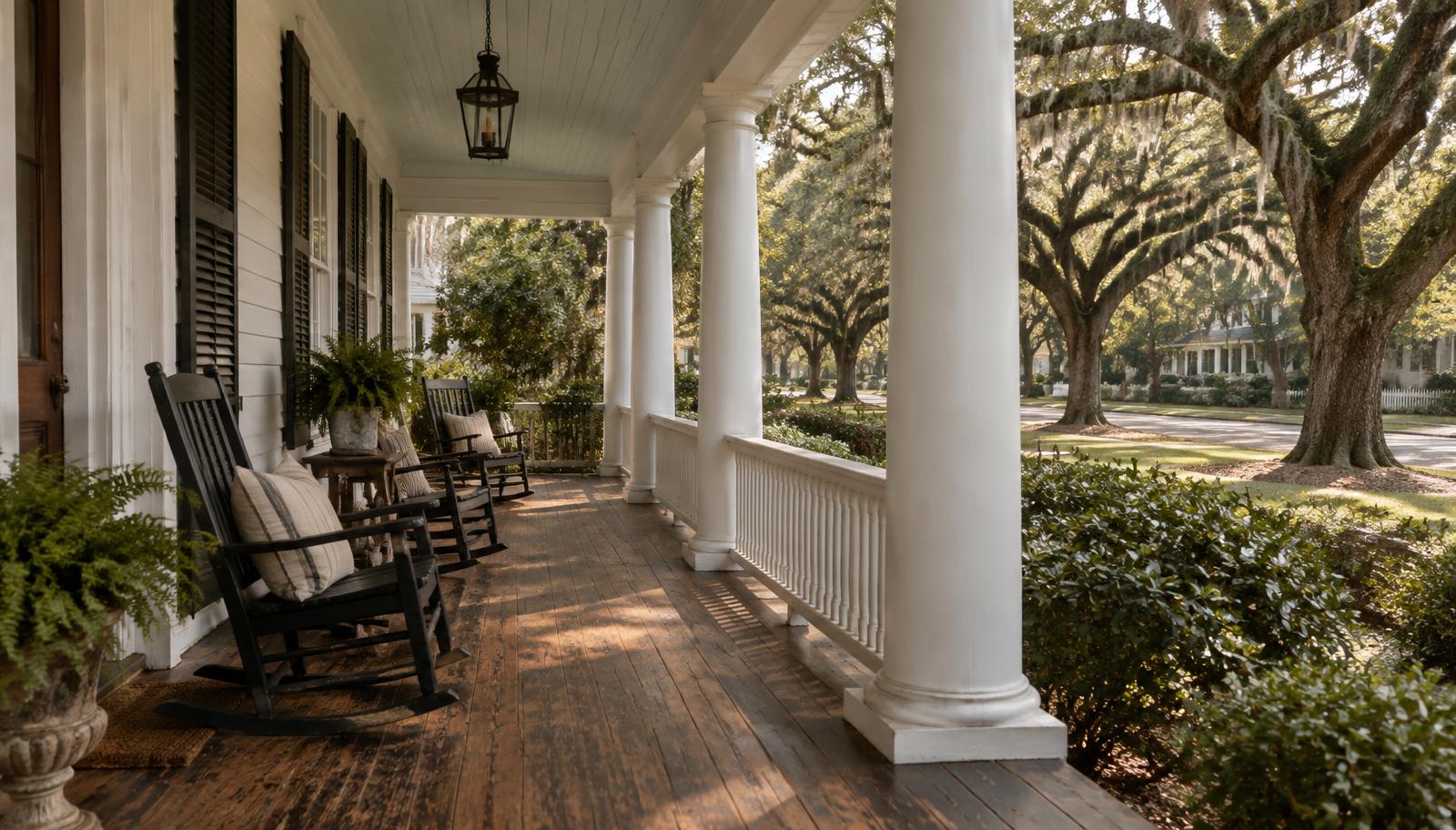
Historic homes in Fayetteville
Twelve foot ceilings. Heart pine floors cut from trees that were old when they were cut. Plaster walls that hold a room's temperature through a Carolina August. A porch deep enough to actually sit on, facing a street with trees that took eighty years to get that big.
You cannot buy this new. Not at any price, in any market, from any builder. The materials are gone and so is the labour.
Fayetteville has two historic districts. Haymount, and downtown. A small number of individually designated properties sit outside them, and that is the list. Land gets subdivided and new neighbourhoods go up every year, but nobody is adding to this one.
What historic means here, and why it is two different things
Two separate systems share one word, and almost everything people get wrong about these houses starts there.
The National Register of Historic Places is a federal listing, and it restricts a private owner in no way at all. You may alter, improve or demolish a listed building without approval from local, state or federal government. The North Carolina State Historic Preservation Office says so plainly. The listing is recognition, and it is what makes the tax credit below available.
Obligations attach in one situation only: when you accept something. Take the rehabilitation tax credit, or a grant, and you agree to follow federal standards for that work. Decline them and you are an ordinary homeowner with an old house.
Local designation is the one that regulates. A local historic district, or a locally designated landmark, is created by the city, and it does carry rules about exterior work.
Haymount and downtown sit in both systems, which is why the two get mixed up. Before you make an offer, the question is not whether the house is historic. It is which of the two applies to that specific address, because they lead to completely different ownership.
What it is worth
Two programmes, and they do not apply to the same properties.
The state rehabilitation tax credit, for owner occupied homes. North Carolina offers a credit worth fifteen percent of qualified rehabilitation spending on a house listed in the National Register, either individually or as a contributing building in a National Register district. There is a minimum spend before anything qualifies, a cap at the top end, and the work has to meet the Secretary of the Interior's Standards for Rehabilitation.
The part that catches people is the order of operations. The application goes to the State Historic Preservation Office in two stages, and work done before they have seen it can be refused. If a renovation is in your plans and the credit is part of your maths, that conversation happens first. Current terms come from SHPO directly, and they are the ones to confirm them with.
The property tax deferral, for locally designated landmarks. A property the city has designated as a historic landmark is taxed on fifty percent of its value under North Carolina General Statute 105-278. It is applied for through the county tax office and it lasts as long as the landmark status does.
Read the next section before treating that as free money.
What it costs you
Mostly calendar, not money.
In a locally designated district, exterior work needs a Certificate of Appropriateness before it starts. Alterations, restoration, new construction, moving a structure, demolition. Site and landscape work can count too.
Interior work does not. Neither does routine maintenance, and re-roofing in the same material is the standard example. Kitchens, bathrooms, walls, wiring and plumbing are yours.
The commission meets monthly, and applications close weeks ahead of the meeting. The certificate also has to be in hand before a building permit is issued, so it is the first step in a project rather than one running alongside. Plan around it and it costs you nothing. Discover it in March with a contractor booked for April and it costs you a season.
An approval runs with the property, not with the owner. One a seller already obtained transfers with the house.
That is the extent of it. A filing calendar, not a judgment on your taste.
If you own one and want to sell
Two things to know before you list.
The tax deferral is deferred, not forgiven. The half you have not been paying has been accumulating as deferred taxes, and it sits as a lien on the property. If the property stops qualifying, the previous three years become payable. Fire and natural disaster are carved out, and nothing is owed in that case.
This is the most common unpleasant surprise in a historic sale, and it is entirely avoidable by knowing the number before you price the house rather than at the closing table.
Buyers will ask which designation applies, and most sellers cannot say. A seller who can answer precisely, and show the designation along with any approvals already granted, is selling a known quantity. A seller who cannot is asking the buyer to carry a risk, and buyers price risk.
Start with a conversation
If you are looking at a particular house, the first useful step is finding out which of the two systems it sits in, because everything else follows from that. If you own one and are thinking about selling, the first useful step is knowing what is owed.
Either one is a thirty minute conversation at no cost.
Common questions
- Which Fayetteville neighbourhoods are historic?
- Fayetteville has two historic districts, Haymount and downtown, along with a small number of individually designated landmark properties elsewhere in the city. Whether a specific address carries local design review is a question to answer for that address before making an offer.
- Does a historic designation mean I need permission to work on my own house?
- It depends which designation. A National Register listing places no restriction on a private owner, and you may alter, improve or demolish a listed building without approval. Local designation is different: in a local historic district, or on a locally designated landmark, exterior work needs a Certificate of Appropriateness before it begins. Interior work and routine maintenance generally do not.
- Can I renovate the inside of a historic home?
- Yes. Interior work does not require a Certificate of Appropriateness. Kitchens, bathrooms, walls, wiring and plumbing are yours to change. The review applies to the exterior.
- Is there a tax benefit to owning a historic home in North Carolina?
- There are two, and they apply to different properties. A state rehabilitation tax credit worth fifteen percent of qualified spending is available for owner occupied homes listed in the National Register, individually or as a contributing building in a National Register district. Separately, properties the city has designated as local historic landmarks are taxed on fifty percent of their value under General Statute 105-278. Confirm current terms with the State Historic Preservation Office and the county tax office.
- What happens to the property tax deferral when I sell?
- The deferred half is not forgiven. It accumulates as deferred taxes and sits as a lien on the property, and if the property stops qualifying, the previous three fiscal years become payable. Losses caused by fire or natural disaster are an exception, and no deferred taxes are due in that case. Find out the amount before pricing the house.